Last month Russian River Brewing collaborated with Italian brewer Agostino Arioli, who owns Birrificio Italiano, to brew one of his beers, La Fleurette, there in Santa Rosa, California. I was there on the brew day (and documented the process in photos), and was eagerly looking forward to tasting the results. Saturday it was tapped and I went up Tuesday to try it. Because the beer was conceived in love, I got a growler of the beer to bring home to share with my wife, the love of my life.
La Fleurette in my garden, among the roses. It was cloudy golden amber and produced a pillowy white head. It had aromas of peppers and a honeyed sweetness, with surprisingly few botanicals. It was light and very refreshing. The mouthfeel was silky smooth, liquid velvet with a touch of gritty pepperness. The honeyed sweetness dominates the flavor profile. The finish is very clean, with only a gentle spiciness lingering after.
Vinnie told me that when they racked the beer, it was all pepper and little else, and it’s been changing quite a bit ever since. Apparently, the flowery aromas I think I expected more of have been coming and going. I believe they’ll be pouring it at the Boonville Beer festival this Saturday, so I wonder what it will be like then. It’s definitely worth seeking out, if you get a chance.

James shoveling barley at the new brewery, only days away from its first brew. I also stopped by the new brewery to see how things were progressing. Vinnie was in the brewhouse, cleaning everything and preparing for the first brew, which should be any day now.
If you enjoyed this post or the Bulletin generally, please consider buying me a pint
![]()
This video was sent to me by the folks at Holy Taco, which appears to be a humor site for the college crowd. It’s a little goofy and some of the humor, sorry Alan — humour, misses the mark, though I certainly did laugh at parts of it. But what made it worthwhile, for me at least, is that they actually let them film inside one of the tanks, empty except for the beechwood chips. Having toured my fair share of Budweiser plants, they really gave these guys “inside access.” Though the segment where the host and the tour guide help “give birth” to the beer seems a little too over the top for my tastes, that or it may be I’m just getting old.
If you enjoyed this post or the Bulletin generally, please consider buying me a pint
The well-known Toronado bar in San Francisco is coming to San Diego … soon. Rumored for almost two years, I attended a reception Thursday afternoon at the new location currently under construction at 4026 30th Street in San Diego’s North Park. If all goes according to plan, it should be open with the next month.

Fal Allen, with San Diego Toronado owner Ian Black. Ian worked at the Toronado in San Francisco for some time before moving to San Diego.

Dave Keen, owner of the Toronado in San Francisco, was on hand and pouring Duvel for Ian and a packed house of revelers.
For more photos from the San Diego Toronado reception, visit the photo gallery.
Vinnie and Natalie Cilurzo, while attending a Slow Food event in Torino in late 2006, befriended Agostino Arioli, who opened one of Italy’s earliest craft breweries. His brewery, Birrificio Italiano, makes a unique beer, La Fleurette, whose varied ingredients include flowers, black pepper and orange blossom honey. Agostino is in California this week for the world Beer Cup and the Craft Brewers Conference which begins next week in San Diego. But yesterday, he was in Santa Rosa visiting his friends at their brewery, Russian River Brewing. The plan was to brew his La Fleurette beer at Russian River, trying to approximate it as best they could using a different brew system. I spent the day documenting the brewing process. There are three galleries and approximately 54 photos of brewing the La Fleurette and the story of the beer, too. Start with gallery one and follow along as I present Brewing La Fleurette at Russian River. At the end of each gallery, there’s a link to the next part of the story, through three separate pages. Enjoy.

Agostino Arioli, from Birrificio Italiano in northern Italy, with Vinnie Cilurzo and Travis Smith, at Russian River Brewing.

The beer included two kinds of dried flowers, violets and roses (shown here).

At the point during the boil where dry-hopping normally occurs, the flowers are added along with orange blossom honey and black pepper.
For many more photos of the La Fleurette brew day at Russian River, start with Part 1.
In early March, during Philly Beer Week, I visited one of Philadelphia’s newest breweries, the Philadelphia Brewing Co., located in the Kensington neighborhood.

Co-owner Nancy Barton, in front of the kegerator. The day we were there, their first beer — Kenzinger — had been tapped for the first time only two days before.

Philadelphia Brewing’s kettles wrapped in heat-saving brick, with brewer John Rehm hard at work.

The exterior of the new Philadelphia Brewing Co., from a flyer.
For more photos of the Philadelphia Brewery, visit the photo gallery.
After our historical walk through Philadelphia, we went to a decidedly more modern destination: Triumph Brewing’s Philadelphia brewpub location. Originally started in Princeton, New Jersey and named for the owner’s triumph over the state’s arcane laws prohibiting brewpubs that allowed them to begin brewing in the first place, their third location is the one we visited.

For more photos from my visit to the Triumph Brewpub in Philadelphia, visit the photo gallery.
Philly Beer Week begins today, and I got in last night along with several other beer writers. We began the evening at a beer dinner, courtesy of the Greater Philadelphia Tourism Marketing Corporation, put on for us at Monk’s Cafe, before setting out for several other Philadelphia beer destinations.

Monk’s co-owner Tom Peters showing off his limited edition bottles of Cantillon Gueuze, with Stasha Ackerman, at a beer dinner last night.
For many more photos from the night before Philly Beer Week, visit the photo gallery.
On Tuesday, my friend Pete Slosberg and I headed up to Russian River Brewing to take a look at how the construction of the new brewery was coming. He had just returned from four months living in Buenos Aries, Argentina, but now that he was back he wanted to enjoy some good beer. So he picked me up and we drove to Santa Rosa to visit Vinnie and Natalie Cilurzo.
Natalie took us over to the new facility, which is about three weeks away from completion. I took a bunch of photos at the construction site, as I’ve done in a few other breweries lately. I thought it was just me who likes to see pictures of brewing equipment, but based on the comments and links I’ve gotten whenever I post brewery photos I think I’m not the only one after all. I’m starting to think it’s a perverse kind of brewery porn that we ooh and ahh over brewing equipment in all it’s magnificent glory. I’m just glad to know I’m not the only deviant.

Pete Slosberg and Vinnie Cilurzo in the old brewery.

At the new brewery, used wine casks stacked in the barrel room.
For more photos from our visit to the new Russian River Brewery still under construction, visit the photo gallery.

A little over a month ago, I stopped by Lagunitas Brewing in Petaluma, California to see how the installation of the new brewhouse was going and took some photographs of the new equipment. I had an opportunity earlier today to stop by again on my way back from an impromptu trip to Russian River Brewing with my good friend Pete Slosberg (but more on that tomorrow). Pete had never been to Lagunitas, whereas I have been there many, many times, so I figured a quick detour to see the brewery was in order. They’re about a week away from the first water test and it looks far closer to completion than my last visit.

The new kettle door adorned with an etching of one of the brewery logos.

All of the pipes are now attached, which includes seven miles of wiring.

Owner Tony Magee shows off the new hop dosers to Pete.
If you enjoyed this post or the Bulletin generally, please consider buying me a pint
Most rye beers that I’m aware of use only around 10-20% rye with the rest being the more traditional barley. I’ve always liked that little something that rye adds to the beer and was in heaven over ten years ago during that year or so when it seemed like almost everybody was making a rye beer. These days, rye beers are a bit more on the rare side, though there’s still a few hundred being made in North America.
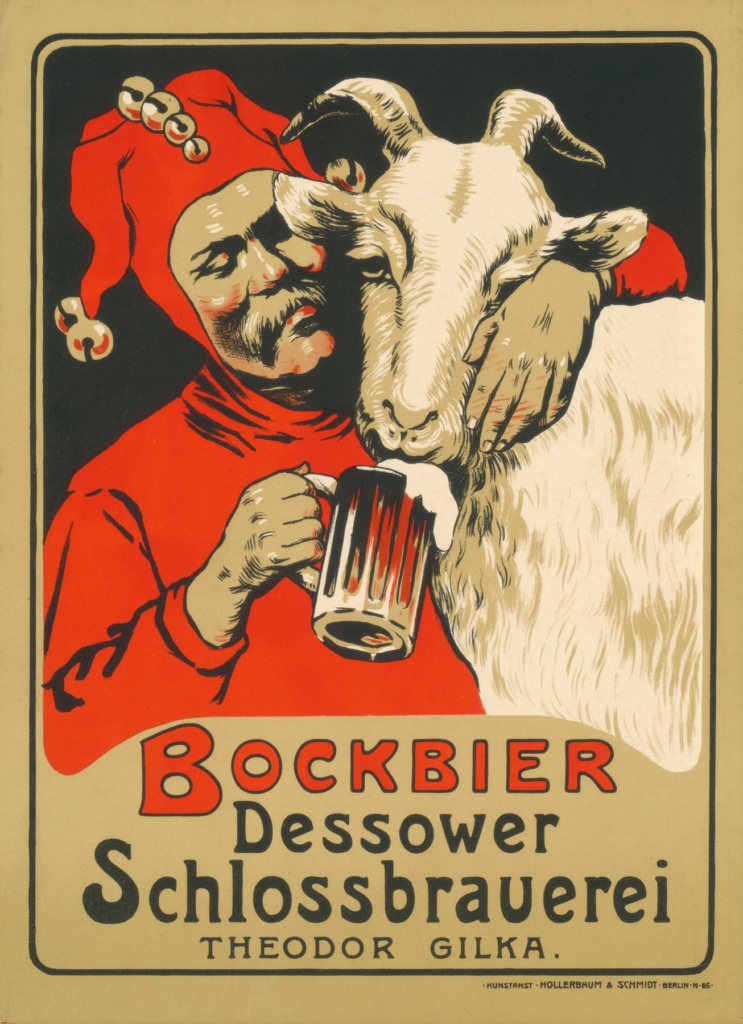
There is also a German style of beer, Roggenbier, which uses at anywhere from 25-65% rye malt, depending on whose account you accept. The German Institute says “half barley malt and equal portions of wheat and rye malts” are used while the BJCP guidelines say “Malted rye typically constitutes 50% or greater of the grist (some versions have 60-65% rye). Remainder of grist can include pale malt, Munich malt, wheat malt, crystal malt and/or small amounts of debittered dark malts for color adjustment.” Nothing against the BJCP, but I’m more inclined to to accept the version of the German Beer Institute since it’s an association of German breweries and related institutions.
So those are the common rye beers, what about using 100% rye? Well, probably the first and foremost reason you never hear about all-rye beers is that it is so difficult to brew with. Rye has no husks, like barley does, and that means it’s extremely difficult to sparge (which is spraying hot water on the spent grain) as without the husks it turns to a thick porridge or concrete.
There was a Irish brewer, Dwan Tipperary Brewing, who closed a few years back, who made a beer called All Rye Beer or All Rye Paddy at least once. But there’s no information as to whether it really used 100% rye malt, apart from that suggestive name. I’ve also come across an account of a homebrewer making an all-rye beer. MoreBeer’s forum also has a topic dedicated to why this is a difficult task.

So perhaps I should change the title to the world’s only currently made commercial example of a 100% rye beer, but it doesn’t sound very sexy that way, now does it? At any rate, Bear Republic Brewing in Healdsburg, California on Friday, debuted what they believe to be the world’s first 100% rye beer. I was on hand to try some of the first keg of their new Easy Ryeder and talk with the brewers about it.
But let’s talk about the beer itself first. It had a dull copper color, slightly hazy, with a decent tan head. The nose was a little restrained, with some bready aromas, a touch of hops and, naturally, some rye character. But it was surprisingly smooth, mild and very drinkable, an easy ryeder indeed. I was surprised to learn it was 5% abv because it seemed more like a session beer to me, and I would have guessed a little lower than that. I thought the rye flavors might overpower the beer, but that’s not the case at all. It is light and refreshing throughout with just enough hop character (at 30 IBUs) for balance. It finishes with just a bit of rye flavor lingering, before dissipating quickly and cleanly. Again, I think my expectations were that if beer with just a fraction of rye tends to give it strong rye flavors and character, that with all rye it would be even more so, but that wasn’t really was not what happened. Instead, they managed to create a unique, ultimately very drinkable beer that in temperament seems closer to a wheat beer, but with the more barley-like flavors of rye.
The beer went through several trials before getting things right. To combat the wort turning to concrete, they had to watch the temperature fluctuations much more closely than usual (no more than 3-5 degrees or it turned to stone), and with bags of rice hulls added to make up for the lack of husks in rye malt. It was, of course, difficult to get the malt to break down and early test batches, if they didn’t become concrete-like, were still very thick and viscous and even hard to remove from the lauter tun at all. Even so, the first test batch that yielded drinkable results was the color of bad gravy, having a dull gray tint to it from all pale rye malt. Apparently it tasted fine, but who among us wants a beer the color of dishwater? Twenty-five pounds of chocolate rye malt was then added to give it the much more appealing color it exhibits today. The hops they used are Chinook and Saaz. It took four tries to get it right, as there really aren’t any manuals for tis kind of beer. Was it worth all that effort? I think so, as the results are quite tasty and in some ways different from anything else I’ve tried. It certainly must have been a learning experience and it’s interesting to see that it is possible on a commercial level to use only rye. It’s quite an achievement, and if you love rye — or just brewing innovation and creativity — you owe it to yourself to get up to Healdsburg to try this new beer.

Bear Republic brewers Rich Norgrove, Jode Yaksic, Peter Kruger and Ray Lindecker. Jode, according to Rich, had the most to do with creating the Easy Ryder, from doing the research, test batches and coming up with the name.
If you enjoyed this post or the Bulletin generally, please consider buying me a pint
I stopped by Lagunitas Brewing Friday afternoon to see the new brewhouse that I’d heard they’re in the process of installing. They’re in week three of a nine-week installation of a new 80-barrel system from a German company, ROLEC Prozess-und Brautechnik GmbH, along with many new pieces of equipment. Peter Moroskow and his team, who also recently installed new breweries at both Stone Brewing and Victory Brewing, had taken over the place and there were miles of pipes and other equipment everywhere, with blueprints dotting the walls and a Bavarian flag hanging overhead.

The Bavarian flag hanging from above, with just a fraction of the pipe remaining on the floor below.
For more photos of brewing equipment being installed at Lagunitas, visit the photo gallery.
Roughly the first two weeks of November, I was fortunate enough to be invited along on a press junket to the Bavarian part of Germany along with a dozen colleagues. I took around 2,000 photos and it’s been taking me forever to go through them all. Day one of our trip went up in early December and today I’ve finally gotten up the next day’s photos. I’ll keep updating this post as I get more of the photos up and in the photo gallery.
The gang of twelve plus three at the Faust Brauerei in Miltenberg, Germany. From left: Cornelius Faust, me, Lisa Morrison, Johannes Faust, Julie Bradford, Andy Crouch, Peter Reid, Horst Dornbusch, Jeannine Marois, Harry Schumacher, Tony Forder, Candace Alstron, Don Russell, Jason Alstrom and Todd Alstrom.
For more photos from my trip Germany, visit Miltenberg Sunday, Miltenberg Monday: Faust Brewery Tour, the Wurzburger Hofbrau, Weyermann Malting and Schlenkerla Tavern in the photo gallery.
If you enjoyed this post or the Bulletin generally, please consider buying me a pint
Click on the Links Below to Support the Beer Bulletin |
[powered by WordPress.]
For more dates, visit the Brookston Almanac
For additional dates and more info, visit the |
From Topix, place your cursor over the headlines to link to the full story