Brookston Beer Bulletin

Jay R. Brooks on Beer

  • Home
  • About
  • Editorial
  • Birthdays
  • Art & Beer

Socialize

  • Dribbble
  • Email
  • Facebook
  • Flickr
  • GitHub
  • Instagram
  • LinkedIn
  • Pinterest
  • RSS
  • Twitter
  • YouTube

Powered by Genesis

Beer Birthday: Tim Webb

March 13, 2026 By Jay Brooks 1 Comment

cantillon-man
Today is the birthday of British beer writer Tim Webb, who along with Stephen Beaumont published the World Atlas of Beer and the Pocket Beer Guide, and also the Good Beer Guide to Belgium, with Joe Stange. I love Tim’s dry wit and his unabashed disdain for America(ns). I like to think I’m tolerated because I know, and like, Canadians and the British. Then again, who knows? Join me in wishing Tim a very happy birthday.

P1120239
Me and Tim at the Falling Rock during an SF Beer Week promotional event during GABF in 2009.

DSCN2078
Tim with Stephen Beaumont and Michelle Wang, showing off the 2nd edition of the Pocket Beer Guide in Leuven.

DSCN1895
The British contingency, Adrian Tierney-Jones, Tim Hampson, Tim and Pete Brown.

DSCN2088-cropped
Stephen Beaumont and I, looking perfectly pleased, while Tim displays a distinct lack of enthusiasm at Brouwerij de Kroon.

Filed Under: Birthdays, Just For Fun Tagged With: England, Great Britain

Beer In Ads #5160: No ‘Butts’ About It!.. Ballantine Brews Bock Beer Best!

March 12, 2026 By Jay Brooks Leave a Comment

Two years ago I decided to concentrate on Bock ads for awhile. Bock, of course, may have originated in Germany, in the town of Einbeck. Because many 19th century American breweries were founded by German immigrants, they offered a bock at certain times of the year, be it Spring, Easter, Lent, Christmas, or what have you. In a sense they were some of the first seasonal beers. “The style was later adopted in Bavaria by Munich brewers in the 17th century. Due to their Bavarian accent, citizens of Munich pronounced ‘Einbeck’ as ‘ein Bock’ (a billy goat), and thus the beer became known as ‘Bock.’ A goat often appears on bottle labels.” And presumably because they were special releases, many breweries went all out promoting them with beautiful artwork on posters and other advertising. With Spring approaching, there are so many great examples that I’m going to post two a day for a few months.

Thursday’s second ad is for Blatz Bock Beer, which was published on March 12, 1956. This ad was for the P. Ballantine & Sons Brewing Co., of Newark, New Jersey, which was originally founded in 1840. This ad ran in The Daily News, of New York, New York.

Filed Under: Art & Beer, Beers, Breweries, Just For Fun Tagged With: Advertising, Ballantine, Bock, History, New Jersey, New York

Historic Beer Birthday: Arthur Guinness II

March 12, 2026 By Jay Brooks Leave a Comment

guinness-new
Though his father’s birthdate is uncertain, today is definitely the birthday of Arthur Guinness II (March 12, 1768-June 9, 1855).

Arthur_Guinness_II
Here’s his story, from Wikipedia:

Arthur was the second son of Arthur Guinness and his wife Olivia Whitmore, and was born at their home at Beaumont House (now a part of Beaumont Hospital, Dublin). He attended White’s Academy in Grafton Street, Dublin, (now the site of Bewley’s). Arthur started working for his father at the St James’s Gate brewery from the 1780s. In 1790 his father, then aged 65, commented in a letter that the expansion of his brewery was partly due to his help:

“..one of my sons is grown up to be able to assist me in this Business, or I wd not have attempted it, tho’ prompted by a demand of providing for Ten Children now living out of one & twenty born to us, & more likely yet to come.”

On his marriage to Anne Lee in 1793 the lease of the brewery was assigned to their marriage settlement, proof that he was intended to take over the management of the brewery on his father’s death. At the time his younger brothers Benjamin (d.1826) and William (d.1842) were also working in the brewery.

In 1782 his father had also founded the “Hibernian Mills” beside the River Camac in Kilmainham to mill flour for the expanding city’s population. This was due to the expansion of Irish exports and commerce fostered from 1779 by the Irish Patriot Party, which the Guinnesses supported.

1803-guinness-II

On his father’s death in January 1803, he and his brothers Benjamin and William Lunell created a partnership trading as: “A. B. & W.L. Guinness & Co, brewers and flour millers”. He bought Beaumont House from his elder brother the Revd. Hosea Guinness, who was Rector of St. Werburgh’s Church, Dublin. In 1808 they bought their first steam engine from Boulton and Watt for pumping water.

Sales grew from 360,936 gallons in 1800 to 2,133,504 gallons by 1815. A slump followed, with sales dropping from 66,000 barrels to 27,000 by 1820.

From its rebuilding in 1797–99 the brewery had stopped brewing ale and concentrated on porter. From the 1820s enhanced and stronger varieties of porter known as “Extra Superior Porter” or “Double Stout” were developed in Dublin for the export trade to Britain. By 1837 the young Benjamin Disraeli mentioned that he had: “.. supped at the Carlton.. off oysters, Guinness and broiled bones”.

In the background Arthur’s brewery benefited hugely until the 1830s from the difference between the malt tax levied in Britain and Ireland, easing his higher-value exports to Britain, and so Arthur became more of a supporter of the union as it was in the 1830s, having been a supporter of Grattan’s form of home rule in his youth.

In 1839 Guinness assisted his nephew John in establishing a short-lived brewery in Bristol.

By his death in 1855, St James’s Gate was brewing and selling 78,000 hogsheads annually, equivalent to 4,212,000 gallons. Of these, 42,000 hogsheads were exported, mainly to the British market.

arthur-guinness-ii-photo

Filed Under: Birthdays, Just For Fun Tagged With: Guinness, History, Ireland

Beer In Ads #5159: Blatz Bock Beer

March 12, 2026 By Jay Brooks Leave a Comment

Two years ago I decided to concentrate on Bock ads for awhile. Bock, of course, may have originated in Germany, in the town of Einbeck. Because many 19th century American breweries were founded by German immigrants, they offered a bock at certain times of the year, be it Spring, Easter, Lent, Christmas, or what have you. In a sense they were some of the first seasonal beers. “The style was later adopted in Bavaria by Munich brewers in the 17th century. Due to their Bavarian accent, citizens of Munich pronounced ‘Einbeck’ as ‘ein Bock’ (a billy goat), and thus the beer became known as ‘Bock.’ A goat often appears on bottle labels.” And presumably because they were special releases, many breweries went all out promoting them with beautiful artwork on posters and other advertising. With Spring approaching, there are so many great examples that I’m going to post two a day for a few months.

Thursday’s first ad is for Blatz Bock Beer, which was published on March 12, 1942. This ad was for the Valentin Blatz Brewing Co., of Milwaukee, Wisconsin, which was originally founded in 1846 as the Cedar Brewery by Johann Braun. Valentin Blatz took over the business in 1851, calling it the City Brewery before adding his name . This ad ran in The Burlington Free Press, of Burlington, Vermont.

Filed Under: Art & Beer, Beers, Breweries, Just For Fun Tagged With: Advertising, Bock, History, Vermont, Wisconsin

Historic Beer Birthday: Arthur Guinness

March 12, 2026 By Jay Brooks Leave a Comment

guinness-new
Today might be, though it probably isn’t, the birthday of Arthur Guinness (March 12, 1724-January 23, 1803). But this is as good a day as any, and in some ways better than many others that have been suggested. I’ve been collecting holidays, dates, birthdays, etc. since the late 1970s. I bought a cocktail paperback book and in the back, one of the appendices had four reasons to drink for every day of the year. Intrigued, I bought a thin diary and started writing them down as I came across new ones. When I outgrew that one, I bought a bigger one and hand-copied all of them from one to the other. Thank goodness computers came along so I didn’t have to keep that up. To save space, everything was color-coded and I never noted the original source, primarily because in those early days it was just something goofy I did for myself and I didn’t envision any practical application for such a list. Silly rabbit. Fast forward thirty years and the first website I set up, in 1998, was The Daily Globe, which was to house my collection of dates, among other things. It was then it became apparent that having the original sources would have been useful, but the damage was done. At some point I stumbled on the birthdate of Arthur Guinness, given as a day in September. Several years ago, after the Bulletin started, I ran my daily list as a matter of course on the date I had for Arthur Guinness’ birthdate, and understandably got called out by the Beer Nut for the source of the date. Of course, I had not been keeping them but have always taken the position that it’s better to celebrate the person’s life even if you don’t have the exact right date than ignore them entirely.

Eventually, I got around to trying to find that earlier source, and in the process opened a can of worms. That September date is more than likely wrong, of course, and was simply made up in 1991 by the Guinness company “apparently to end speculation about his birthdate,” as if that would do any good. That’s probably where I got the date, but since I didn’t keep my sources, who knows? In 2009, Guinness decided to declare September 24 “Arthur’s Day” further muddying the waters. The first year was to mark the 250th anniversary of Guinness, but in subsequent years it became a music festival and opportunity to do a worldwide toast to promote the beer. They kept up that farce on the 3rd Thursday in September each year until 2013, but cancelled it in 2014. So clearly September is a dead end.

In 2012, my favorite British beer historian, Martyn Cornell, weighed in on Guinness myths and scandals, including the date of his birth.

“Arthur Guinness was born in 1725 in Celbridge, County Kildare.” The Dictionary of Irish Biography claims he was born on March 12, 1725. However, that does not match the statement on Arthur Guinness’s grave in Oughterard, Kildare that he died on January 23, 1803 “aged 78 years”, from which it can be inferred that his birthday must have been between January 24, 1724 and January 23, 1725. The most accurate statement, therefore is that his date of birth is unknown, but he was born 1724/5.

Here’s his gravestone:

Guinness-gravestone

So if March 12, 1725 can’t be correct, but it must be “between January 24, 1724 and January 23, 1725,” then maybe it was 1724. So for no better reason than it fits the span of dates, maybe The Dictionary of Irish Biography simply got the year wrong by one. Maybe not, but I like having a date to hang my hat on. So until I find something more compelling, and merely for the purposes of commemoration, I’ll toast Arthur Guinness on March 12.

Arthur Guinness, of course, founded the Guinness Brewery in 1759, famously signing a 9,000-year lease for the St. James’ Gate property in Dublin. Shortly afterwards, in 1761, “he married Olivia Whitmore in St. Mary’s Church, Dublin, and they had 21 children, 10 of whom lived to adulthood.”

Arthur_Guinness

The Colson Center, a Christian website, has a short biography:

Arthur Guinness was born to a family of brewers on the estate of Arthur Price, the Protestant Church of Ireland archbishop of Cashel. Arthur’s father Richard was Dr. Price’s brewer, and was known for his particularly fine porter beer. He taught Arthur the craft of brewing.

Arthur must have been a particular favorite of Dr. Price, because on the archbishop’s death in 1752 he bequeathed to Arthur the sum of £100, the equivalent of four years wages. Over the following three years, he perfected his skills as the brewer for an inn owned by his stepmother. In 1755, he struck out his own, purchasing a small brewery in the village of Leixlip. He may have seen brewing beer as a service to the community: this was the era in which gin was devastating poor communities and beer provided a far healthier and less intoxicating alternative.

In 1759, Arthur moved to Dublin. There he found an abandoned brewery at St. James’ Gate, for rent for £100 down and £45 per year. Arthur somehow managed to get the owner to agree to a lease for up to 9,000 years on these terms, and so Arthur opened his new brewery in Dublin.

Arthur was a very dedicated member of the Church of Ireland. In Dublin, he attended a church in which John Wesley preached, and Wesley’s ideas about hard work, the goodness and responsibilities of wealth, and the importance of caring for the poor had a powerful impact on Arthur’s faith.
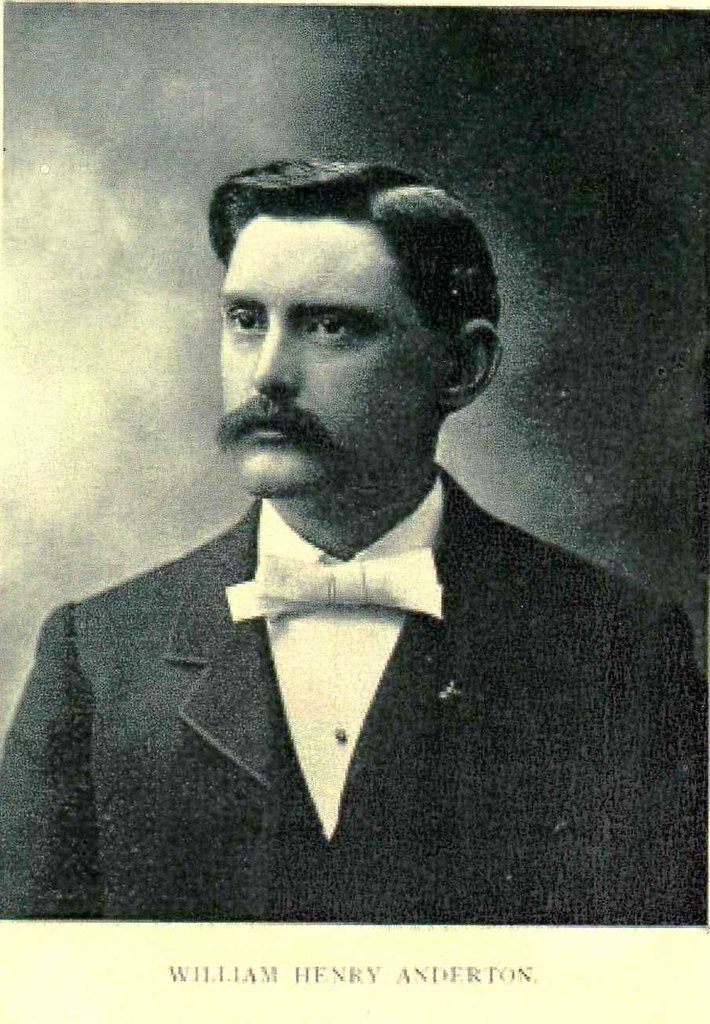
As a result, Arthur became involved in a variety of social welfare organizations. He was on the board and became governor of Meath hospital and was dedicated to ensuring that it provided care for the poor. He also gave to a number of charities, promoted Gaelic arts to encourage pride in the Irish heritage, and joined the Friendly Brothers of St. Patrick, an organization dedicated to ending the practice of dueling.

He was also a champion of the Sunday School movement in Ireland, which provided basic education to children. For Arthur, this was part of an interest in prison reform: he believed that education combined with Biblical teaching would keep people from falling into a life of crime.

Even though a dedicated Protestant in a community that looked down at Roman Catholics, Guinness advocated for the rights of Catholics and treated them well at his brewery. This may have cost him business, but he believed it was the right thing to do.

Meanwhile, Guinness continued to develop and improve as a brewer. In 1779, he was named official brewer of Dublin Castle. At this point, he was brewing ales as well as a variety of dark porters.

Gradually, though, he decided to specialize in porter; he finally gave up brewing ale in 1799. Porter was very popular in England, and when Arthur and his fellow Irish brewers finally figured out how to produce a good quality black porter (stout), specializing in this kind of beer made sense. Soon Guinness’s porter was in demand not only in Dublin but increasingly in England as well.

Arthur died just a few years later, in 1803. But his story does not end there. Over the next century, Guinness grew to be one of the largest and most respected breweries in the world. That story is a tribute to Arthur’s hard work and insistence on excellence, qualities which he passed on to his children and heirs. But that is only part of the Guinness story. The other part is the amount of good Guinness has done for its employees and their families and for Dublin, all of which is also part of Arthur’s legacy.

Arthur Guinness Stamp

And here’s another bio:

The Guinness story began in a small Irish village Celbridge, which was the home of Arthur Price, the Church of Ireland Archbishop of Cashel with a sufficient security. Arthur was one of those people who did not want to burden himself with a daily routine, and therefore he had hired Arthur Guinness (1724 or 1725 – January 23, 1803), a manager for all the cases. As time passed a very real friendship ensued between them to the point that Price baptized Arthur’s son Arthur Guinness II, born on March 12, 1768, who helped his father since childhood on the farm of the generous employer.

In his spare time, Arthur Guinness brewed real ale. Dr. Price had a benefit of all necessary equipment at his basement for this. In 1752, Arthur Price died. Such a tragic event, however, marked the beginning of Guinness brewing company’s story. The thing is that Arthur Price left a legacy of 100 pounds to both of them: Arthur Guinness and his son (at the time it was quite a large sum of money).

Guinness story began in a small Irish village Celbridge, which was the home of Arthur Price, the Church of Ireland Archbishop of Cashel with a sufficient security. Arthur was one of those people who did not want to burden himself with a daily routine, and therefore he had hired Arthur Guinness (1724 or 1725 – January 23, 1803), a manager for all the cases. As time passed a very real friendship ensued between them to the point that Price baptized Arthur’s son Arthur Guinness II, born on March 12, 1768, who helped his father since childhood on the farm of the generous employer.

In his spare time, Arthur Guinness brewed real ale. Dr. Price had a benefit of all necessary equipment at his basement for this. In 1752, Arthur Price died. Such a tragic event, however, marked the beginning of Guinness brewing company’s story. The thing is that Arthur Price left a legacy of 100 pounds to both of them: Arthur Guinness and his son (at the time it was quite a large sum of money).

However, all this time, Arthur continued to produce the same ale. Arthur Guinness started producing the dark beer only in 1799. The production of the dark beer with creamy foam originated in 1799 that further made the company one of the symbols of Ireland. Four years later after this momentous event, at age of 78, Arthur Guinness died. As a legacy to their children businessman left 25,000 pounds, which by today’s standards would amount to about 865,000 pounds.
Filed Under: Birthdays, Just For Fun Tagged With: Guinness, History, Ireland

Beer In Ads #5158: For Years, New York’s Only Real Bock Beer

March 11, 2026 By Jay Brooks Leave a Comment

Two years ago I decided to concentrate on Bock ads for awhile. Bock, of course, may have originated in Germany, in the town of Einbeck. Because many 19th century American breweries were founded by German immigrants, they offered a bock at certain times of the year, be it Spring, Easter, Lent, Christmas, or what have you. In a sense they were some of the first seasonal beers. “The style was later adopted in Bavaria by Munich brewers in the 17th century. Due to their Bavarian accent, citizens of Munich pronounced ‘Einbeck’ as ‘ein Bock’ (a billy goat), and thus the beer became known as ‘Bock.’ A goat often appears on bottle labels.” And presumably because they were special releases, many breweries went all out promoting them with beautiful artwork on posters and other advertising. With Spring approaching, there are so many great examples that I’m going to post two a day for a few months.

Wednesday’s second ad is for Rheingold Bock Beer, which was published on March 11, 1957. This ad was for the Liebmann Breweries, of New York, New York, a.k.a. Rheingold Brewery, which was originally founded in 1854 by Samuel Liebmann. This ad ran in The Herald News, also of New York, New York.

Filed Under: Art & Beer, Beers, Breweries, Just For Fun Tagged With: Advertising, Bock, History, New York, Rheingold

Beer Birthday: Hugh Sisson

March 11, 2026 By Jay Brooks Leave a Comment

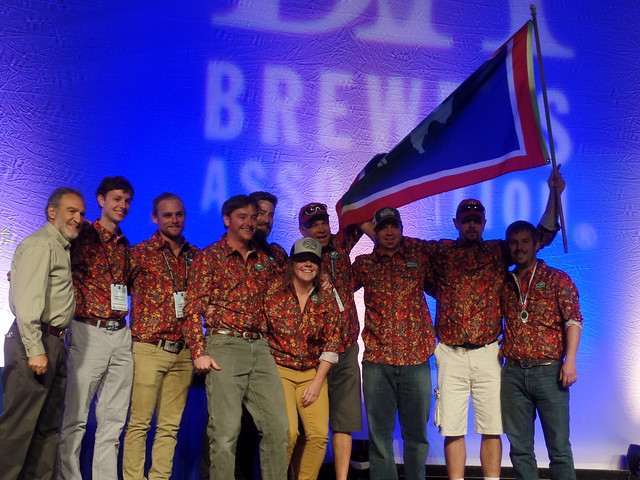
Today is the 72nd birthday of Hugh Sisson (March 11, 1954- ). He founded Heavy Seas Brewing in Baltimore, Maryland in January of 1995, though officially its name is the Clipper City Brewing Co. But he’d been dabbling in beer long before that, starting with running Maryland’s only craft beer bar in 1982 with his father. In 1986, he helped get his state’s laws changed to allow brewpubs, and opened Sisson’s Brewpub. Wanting to focus more on the beer, het left the brewpub behind and started Clipper City, rebranding it in 2010 as Heavy Seas, since those were his most popular beers. I’ve only run into Hugh a few times over the years, but first visited Clipper City in 1998, when GABF On the Road was in town. Join me in wishing High a very happy birthday.

Dressed up for their 20th anniversary.

Filed Under: Birthdays, Breweries, Just For Fun Tagged With: Baltimore, Maryland, United States

Beer In Ads #5157: The Belle Of The Bocks Is A Blonde!

March 11, 2026 By Jay Brooks Leave a Comment

Two years ago I decided to concentrate on Bock ads for awhile. Bock, of course, may have originated in Germany, in the town of Einbeck. Because many 19th century American breweries were founded by German immigrants, they offered a bock at certain times of the year, be it Spring, Easter, Lent, Christmas, or what have you. In a sense they were some of the first seasonal beers. “The style was later adopted in Bavaria by Munich brewers in the 17th century. Due to their Bavarian accent, citizens of Munich pronounced ‘Einbeck’ as ‘ein Bock’ (a billy goat), and thus the beer became known as ‘Bock.’ A goat often appears on bottle labels.” And presumably because they were special releases, many breweries went all out promoting them with beautiful artwork on posters and other advertising. With Spring approaching, there are so many great examples that I’m going to post two a day for a few months.

Wednesday’s first ad is for Rheingold Pale Bock Beer, which was published on March 11, 1940. This ad was for the Liebmann Breweries, of New York, New York, a.k.a. Rheingold Brewery, which was originally founded in 1854 by Samuel Liebmann. This ad ran in The Daily News, also of New York, New York.

Filed Under: Art & Beer, Beers, Breweries, Just For Fun Tagged With: Advertising, Bock, History, New York, Rheingold

Beer Birthday: Carsten Berthelsen

March 11, 2026 By Jay Brooks Leave a Comment

carsten-berthelsen

Today is the 75th birthday of Danish beer writer and lecturer Carsten Berthelsen, who I’ve gotten to know judging at the Brussels Beer Challenge over the years. We also both judge the World Beer Awards, but in different parts of the world. The author of ten books, he hosts numerous tastings throughout the year, and is a fun person to go drinking with. Join me in wishing Carsten a very happy birthday.

Carsten-Berthelsen-bbc
Carsten’s Brussels Beer Challenge photo from 2015.
BBC-0002
Drinking in Brussels late one night in 2015.
BBC-0001
On a brewery tour, somewhere in Belgium, 2016.

Filed Under: Birthdays, Just For Fun Tagged With: Denmark

Beer Birthday: Mark Edelson

March 11, 2026 By Jay Brooks 3 Comments

Today is the 62nd birthday of Mark Edelson, a co-founder and the managing partner of Iron Hill Brewery & Restaurant, a small brewpub chain that operated numerous brewpubs in the tri-state area of Delaware, New Jersey and Pennsylvania. Unfortunately, they recently closed all of their locations. Mark had been a vocal and active member of the brewing community, especially around his mid-Atlantic home but also through the BA, too. Join me in wishing Mark a very happy birthday.

Toasting the Class of ’96: Greg Koch, Mark, Bill Covaleski, Tom Kehoe, Gene Muller & Sam Calagione at the “Older Bud No Weiser” event during Philly Beer Week several years ago.
Carol and Ed Stoudt with Mark at the opening event for the first Philly Beer Week.
Mark on stage with Bob Barrar and Charlie Papazaian at the 2007 GABF.
A Good Night For Mark Edelson, from Iron Hill
A great night For Mark during GABF week in the basement of the Falling Rock near the end of a very good evening.


Filed Under: Birthdays, Just For Fun Tagged With: Delaware, Pennsylvania

Next Page »

Find Something

Northern California Breweries

Please consider purchasing my latest book, California Breweries North, available from Amazon, or ask for it at your local bookstore.

Recent Comments

  • Bob Paolino on Beer Birthday: Grant Johnston
  • Gambrinus on Historic Beer Birthday: A.J. Houghton
  • Ernie Dewing on Historic Beer Birthday: Charles William Bergner 
  • Steve 'Pudgy' De Rose on Historic Beer Birthday: Jacob Schmidt
  • Jay Brooks on Beer Birthday: Bill Owens

Recent Posts

  • Beer Birthday: Tim Webb March 13, 2026
  • Beer In Ads #5160: No ‘Butts’ About It!.. Ballantine Brews Bock Beer Best! March 12, 2026
  • Historic Beer Birthday: Arthur Guinness II March 12, 2026
  • Beer In Ads #5159: Blatz Bock Beer March 12, 2026
  • Historic Beer Birthday: Arthur Guinness March 12, 2026

BBB Archives

Feedback

Head Quarter
This site is hosted and maintained by H25Q.dev. Any questions or comments for the webmaster can be directed here.